
Semax & Selank: Why These Cognitive Peptides Are Often Paired

A clear guide to why Semax and Selank are often paired in cognitive, neurological, stress-response, and peptide research conversations, including how each compound differs and how SEQUENCE structures single-compound and combination formats.
How Peptide Testing Works: HPLC, LC-MS, COAs, and Janoshik Verification

A clear guide to peptide testing, including how HPLC, LC-MS, certificates of analysis, batch traceability, purity reports, and Janoshik verification help support product clarity and accountability.
Tissue Repair Pathways: Why BPC-157, TB-500, KPV, and GHK-Cu Are Often Grouped Together
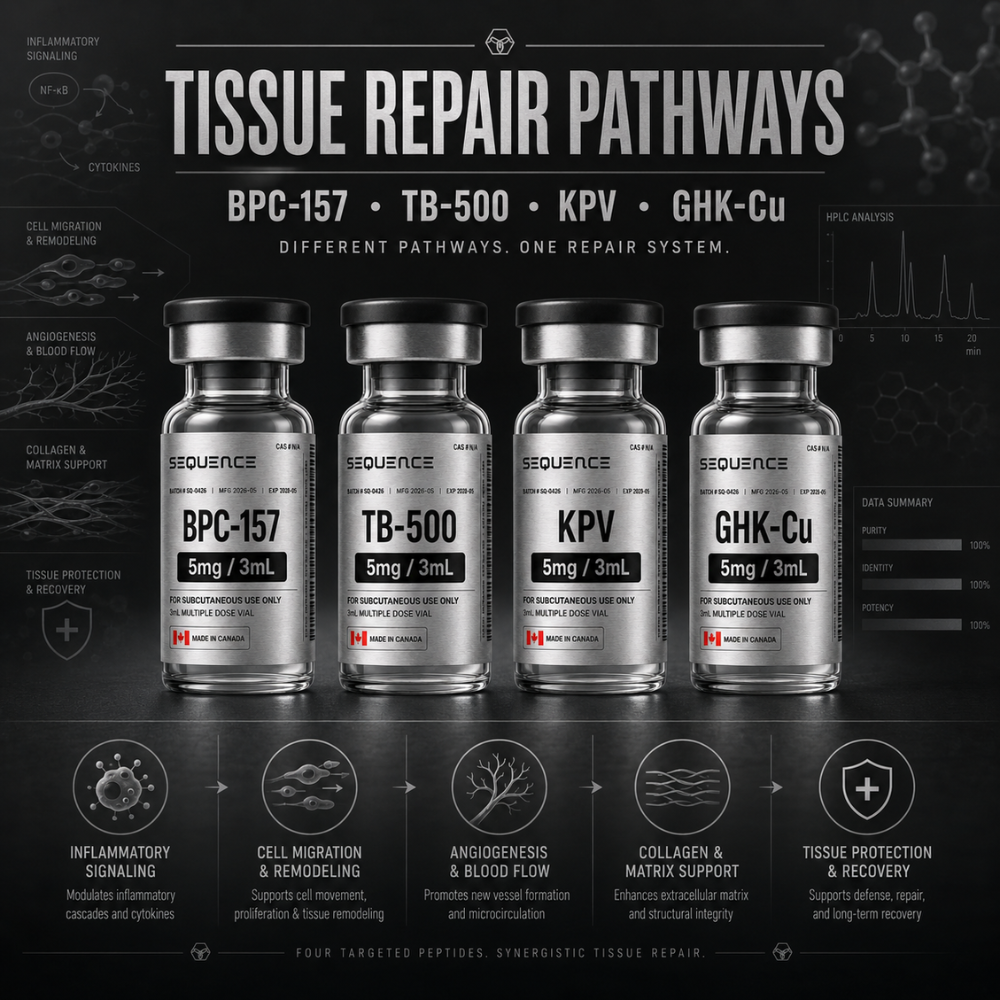
A clinical overview of tissue repair pathways and why BPC-157, TB-500, KPV, and GHK-Cu are often grouped across recovery, inflammatory signaling, cell migration, collagen, and tissue-remodeling research.
Single Peptides vs Combination Vials: How to Think About Product Pairings

A clear guide to single-compound peptides, combination vials, product pairings, and how SEQUENCE structures peptide formats with defined concentrations, category logic, batch traceability, and cleaner comparison across the catalogue.
Lyophilized vs Reconstituted Peptides: What Changes After Preparation

A practical guide explaining the difference between lyophilized and reconstituted peptides, what changes after preparation, why storage expectations shift, and how product handling affects peptide integrity after a vial moves from dry powder to liquid solution.
What Are Peptides? A Clear Introduction Before You Buy
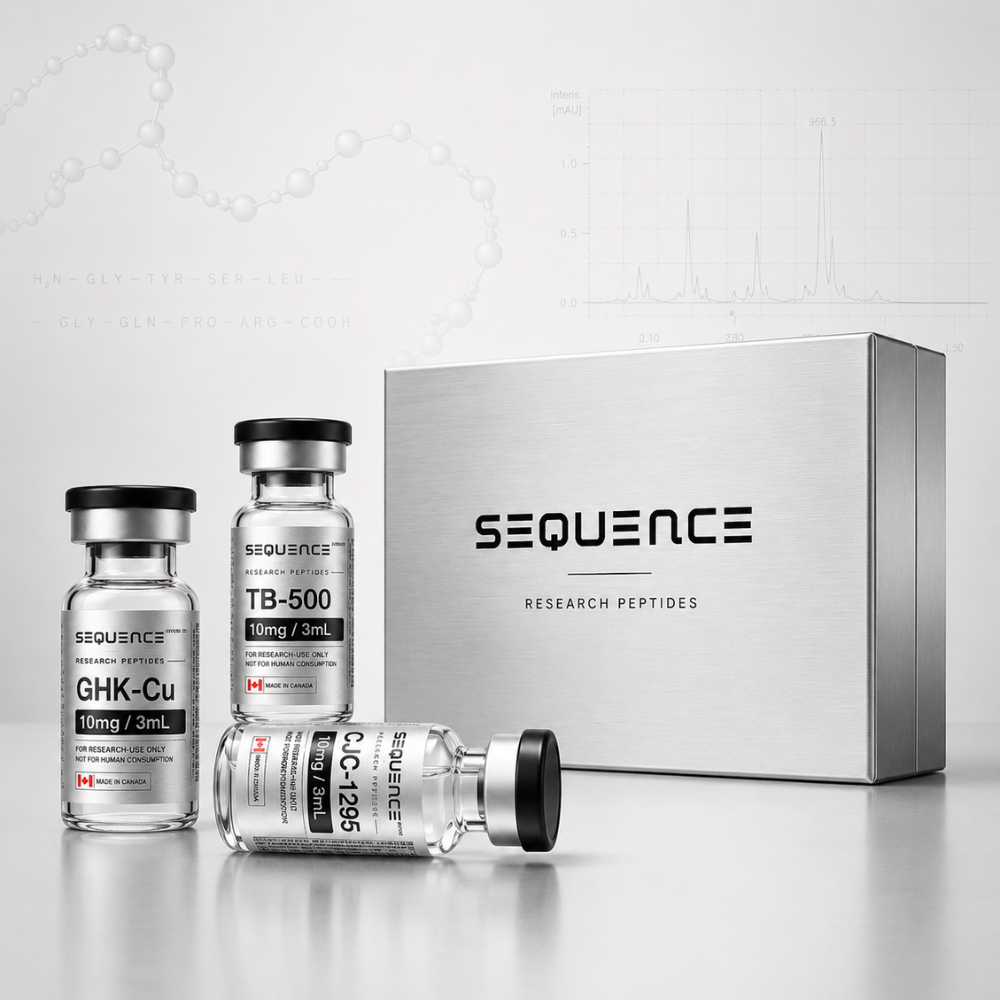
A clear introduction to peptides, amino acids, vial formats, lyophilized powder, concentration labels, product categories, and why testing matters before comparing peptide products.
BPC-157 & TB-500: Why These Peptides Are Often Discussed Together
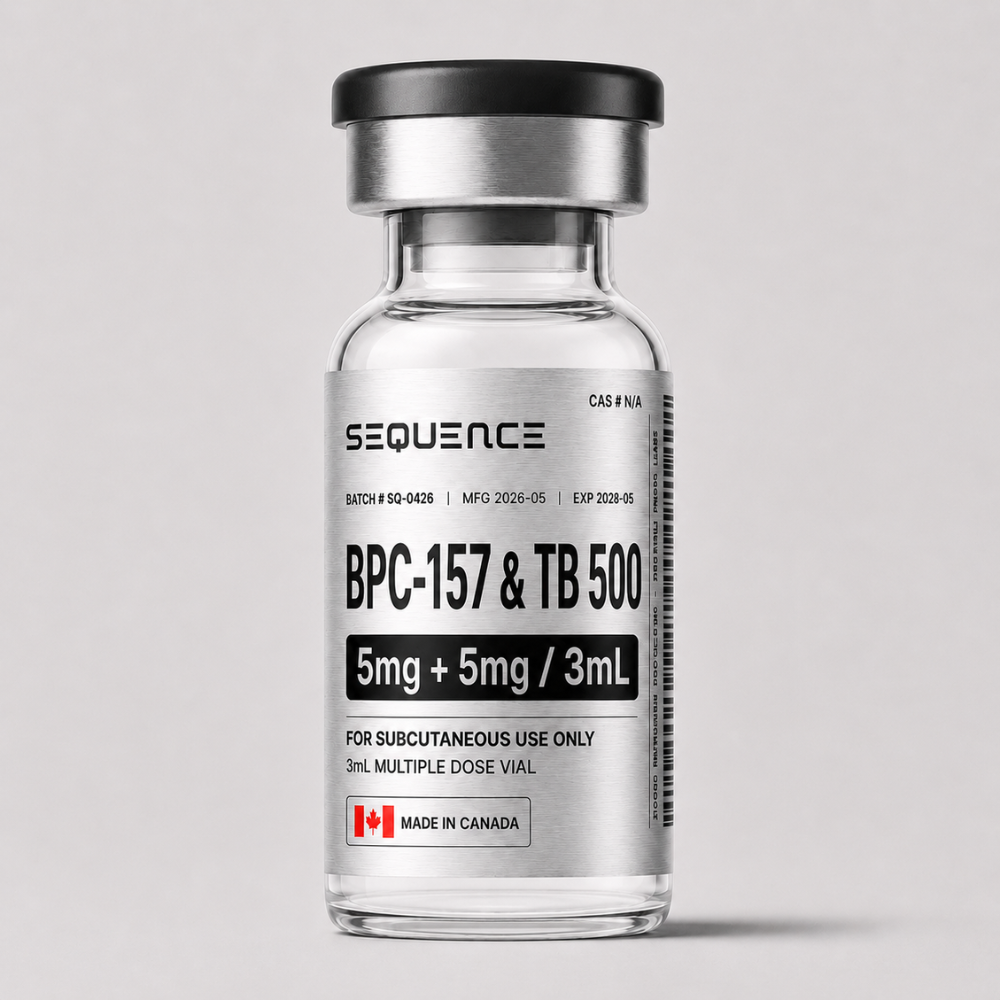
BPC-157 and TB-500 are two of the most recognized peptides in recovery and repair-focused research. This guide explains why they are often discussed together, how their research contexts differ, and why concentration clarity, batch traceability, and testing standards matter when comparing peptide products.