LEARNING ARCHIVE

Explore Research & Education

Peptide education organized with structure and clarity. Explore compound guides, preparation resources, testing explanations, and research-focused articles without the noise.

The SEQUENCE learning archive is built to organize peptide education with structure, clarity, and clinical discipline. Explore compound guides, preparation resources, testing explanations, and research-focused articles designed to help visitors navigate peptide categories, concentration language, handling considerations, storage basics, and verification standards with less confusion. Clear categories. Practical context. Professional presentation.
Structured Education

Organized topics built to simplify research and reduce noise.

Compound Context

Clear explanations of compounds, categories, and use-case themes.

Preparation Clarity

Straightforward guidance on handling, concentration, and storage.

Verification Standards

Educational content aligned with SEQUENCE’s testing and transparency standards.
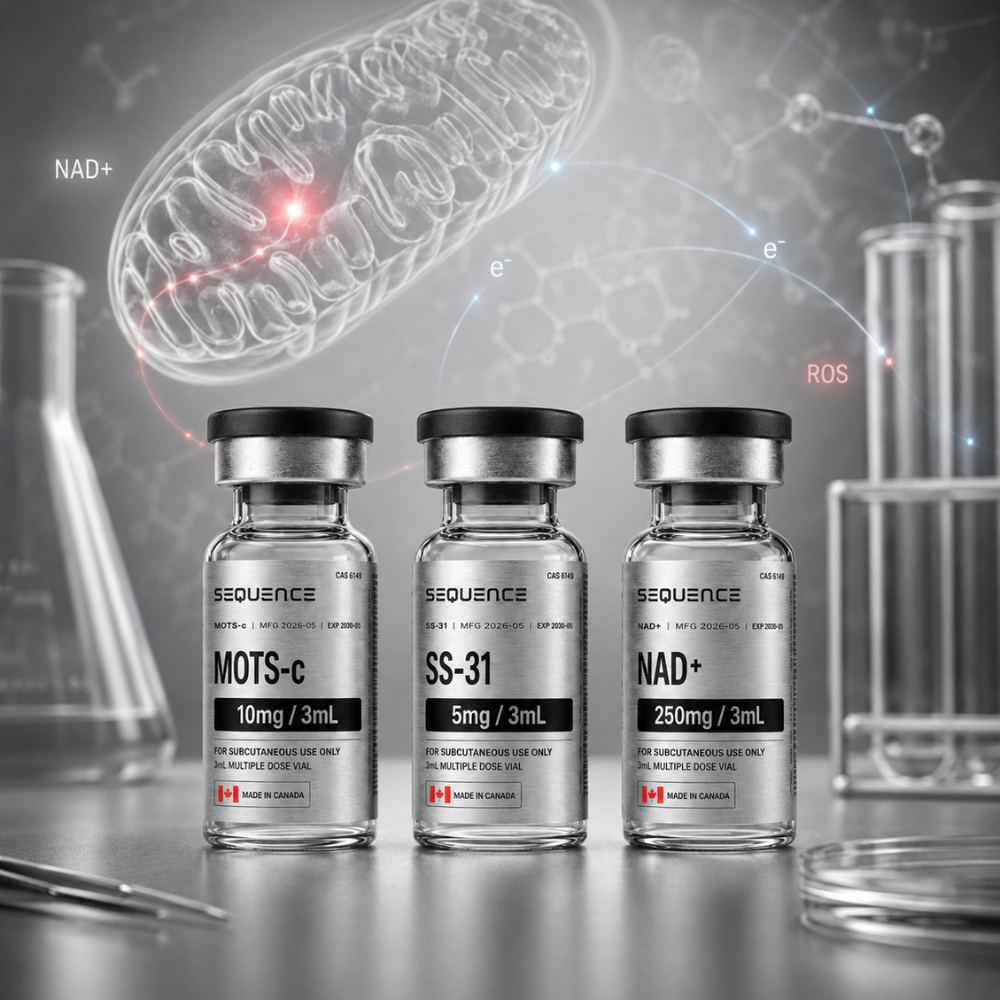
Mitochondrial Signaling: MOTS-c, SS-31, NAD+, and Cellular Energy Pathways

A clinical overview of mitochondrial signaling, cellular energy pathways, MOTS-c, SS-31, and NAD+, including how redox balance, membrane function, and mitochondrial-derived signals shape cellular health research.

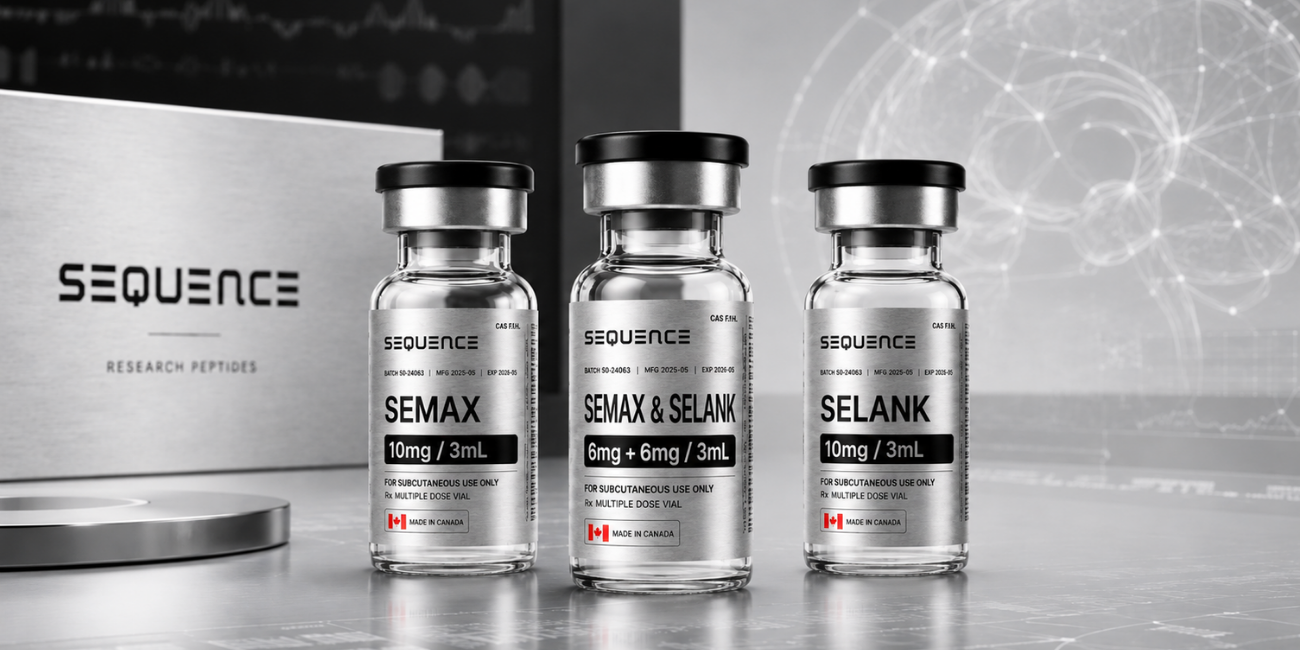
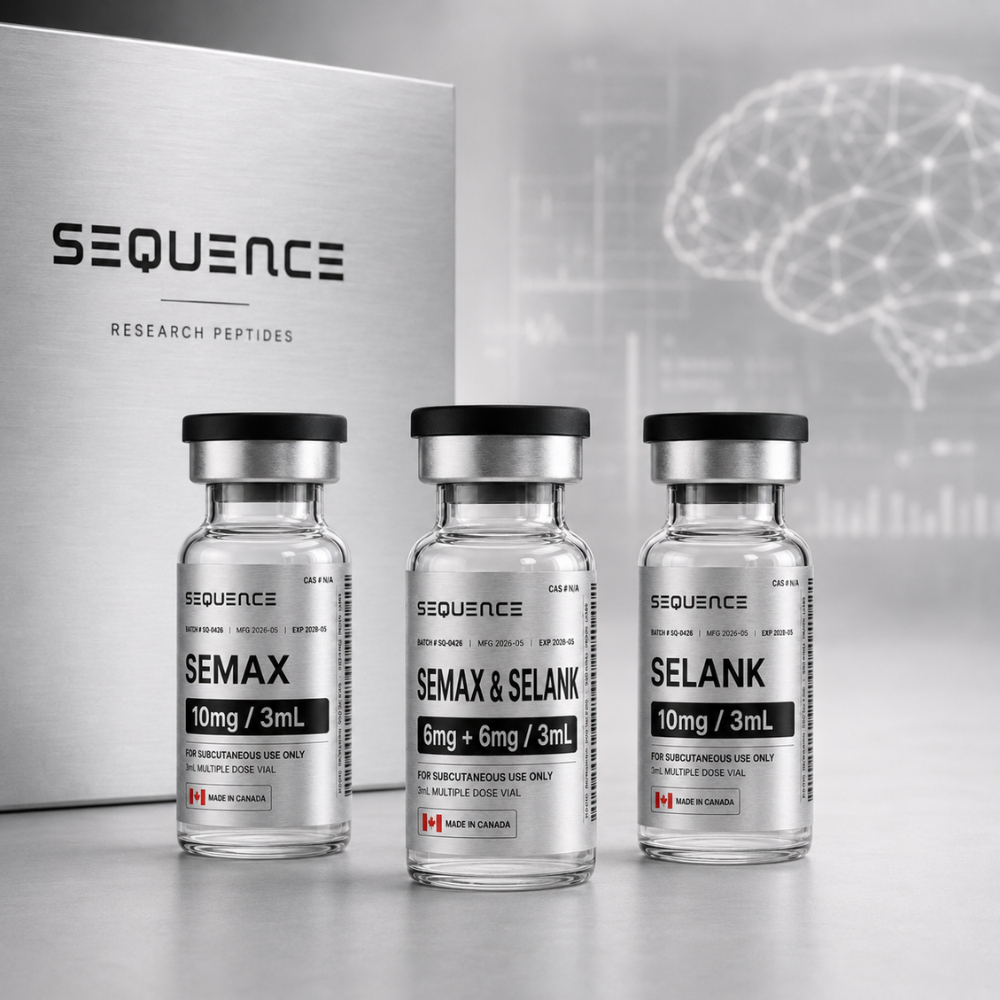
Semax & Selank: Why These Cognitive Peptides Are Often Paired

A clear guide to why Semax and Selank are often paired in cognitive, neurological, stress-response, and peptide research conversations, including how each compound differs and how SEQUENCE structures single-compound and combination formats.

Peptide Reconstitution Explained: Concentration, Volume, and Clarity

Peptide reconstitution is simple when the language is clean. This guide explains how lyophilized powder becomes a prepared solution, why milligrams and millilitres are not interchangeable, and how total amount, final volume, and concentration work together. No mystery. No basement-label calculus. Just compound, volume, concentration, and clarity.

Why Peptide Sequence Matters: Structure, Function, and Signal Identity

Peptide sequence is not a minor technical detail - it is the foundation of peptide identity. This guide explains how amino acid order shapes structure, function, stability, interaction, and biological signal. In peptide biology, the details are not decoration. They are the signal.

GHK-Cu: Copper, Skin Architecture, and the Language of Repair

GHK-Cu is more than a cosmetic peptide. As a copper-bound tripeptide, it sits at the intersection of skin structure, extracellular matrix remodeling, fibroblast activity, and repair-associated signaling. This guide explores GHK-Cu through the lens of copper biology, dermal architecture, collagen and elastin pathways, and the deeper language of tissue maintenance.

How Peptide Testing Works: HPLC, LC-MS, COAs, and Janoshik Verification

A clear guide to peptide testing, including how HPLC, LC-MS, certificates of analysis, batch traceability, purity reports, and Janoshik verification help support product clarity and accountability.

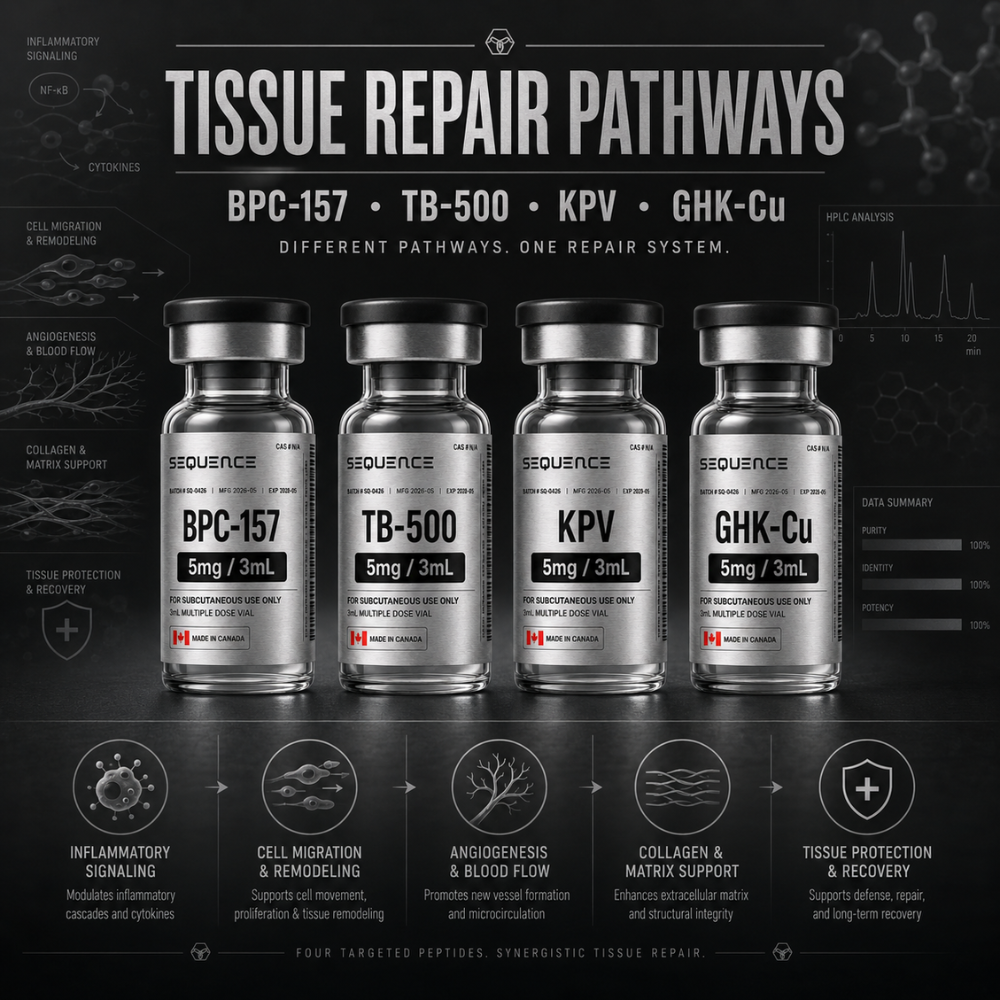
Tissue Repair Pathways: Why BPC-157, TB-500, KPV, and GHK-Cu Are Often Grouped Together

A clinical overview of tissue repair pathways and why BPC-157, TB-500, KPV, and GHK-Cu are often grouped across recovery, inflammatory signaling, cell migration, collagen, and tissue-remodeling research.

Single Peptides vs Combination Vials: How to Think About Product Pairings

A clear guide to single-compound peptides, combination vials, product pairings, and how SEQUENCE structures peptide formats with defined concentrations, category logic, batch traceability, and cleaner comparison across the catalogue.

Lyophilized vs Reconstituted Peptides: What Changes After Preparation

A practical guide explaining the difference between lyophilized and reconstituted peptides, what changes after preparation, why storage expectations shift, and how product handling affects peptide integrity after a vial moves from dry powder to liquid solution.

What Are Peptides? A Clear Introduction Before You Buy

A clear introduction to peptides, amino acids, vial formats, lyophilized powder, concentration labels, product categories, and why testing matters before comparing peptide products.

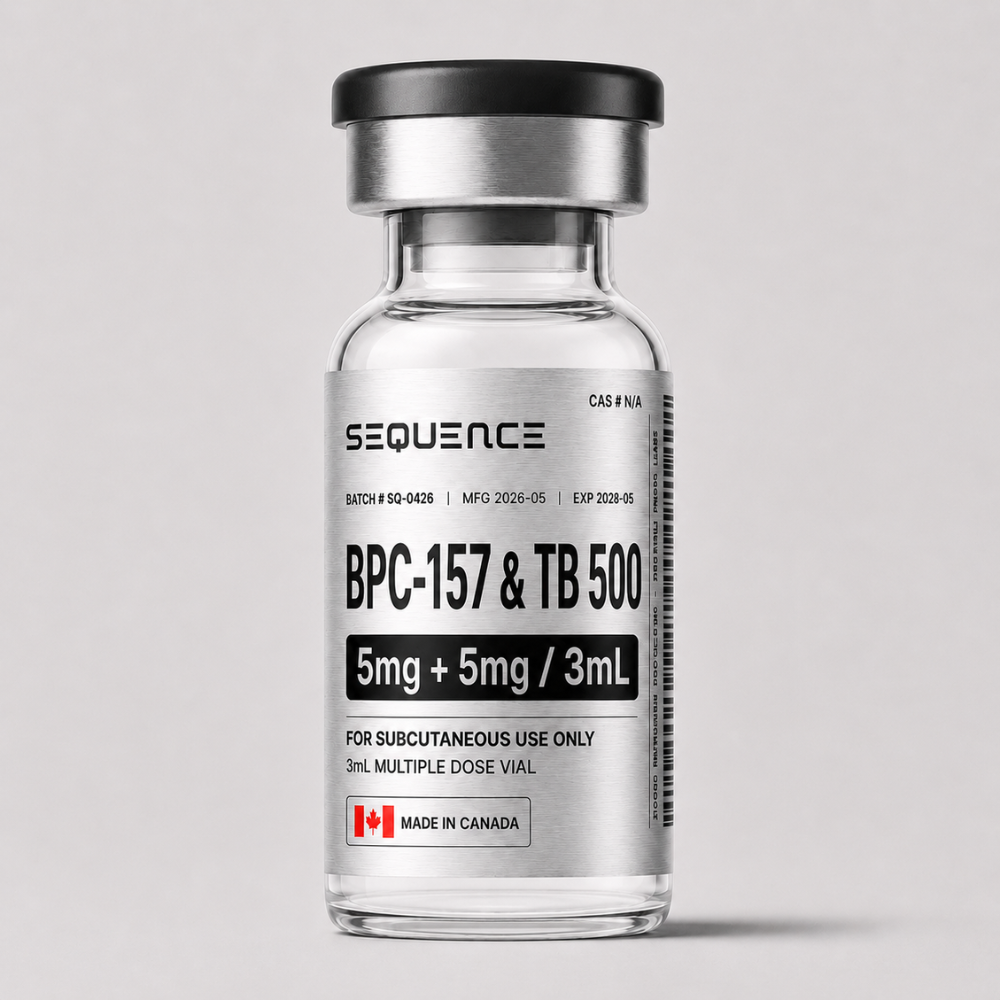
BPC-157 & TB-500: Why These Peptides Are Often Discussed Together

BPC-157 and TB-500 are two of the most recognized peptides in recovery and repair-focused research. This guide explains why they are often discussed together, how their research contexts differ, and why concentration clarity, batch traceability, and testing standards matter when comparing peptide products.

Mitochondrial Signaling: MOTS-c, SS-31, NAD+, and Cellular Energy Pathways

A clinical overview of mitochondrial signaling, cellular energy pathways, MOTS-c, SS-31, and NAD+, including how redox balance, membrane function, and mitochondrial-derived signals shape cellular health research.

Semax & Selank: Why These Cognitive Peptides Are Often Paired

A clear guide to why Semax and Selank are often paired in cognitive, neurological, stress-response, and peptide research conversations, including how each compound differs and how SEQUENCE structures single-compound and combination formats.

Peptide Reconstitution Explained: Concentration, Volume, and Clarity

Peptide reconstitution is simple when the language is clean. This guide explains how lyophilized powder becomes a prepared solution, why milligrams and millilitres are not interchangeable, and how total amount, final volume, and concentration work together. No mystery. No basement-label calculus. Just compound, volume, concentration, and clarity.

Why Peptide Sequence Matters: Structure, Function, and Signal Identity

Peptide sequence is not a minor technical detail - it is the foundation of peptide identity. This guide explains how amino acid order shapes structure, function, stability, interaction, and biological signal. In peptide biology, the details are not decoration. They are the signal.

GHK-Cu: Copper, Skin Architecture, and the Language of Repair

GHK-Cu is more than a cosmetic peptide. As a copper-bound tripeptide, it sits at the intersection of skin structure, extracellular matrix remodeling, fibroblast activity, and repair-associated signaling. This guide explores GHK-Cu through the lens of copper biology, dermal architecture, collagen and elastin pathways, and the deeper language of tissue maintenance.

How Peptide Testing Works: HPLC, LC-MS, COAs, and Janoshik Verification

A clear guide to peptide testing, including how HPLC, LC-MS, certificates of analysis, batch traceability, purity reports, and Janoshik verification help support product clarity and accountability.

Tissue Repair Pathways: Why BPC-157, TB-500, KPV, and GHK-Cu Are Often Grouped Together

A clinical overview of tissue repair pathways and why BPC-157, TB-500, KPV, and GHK-Cu are often grouped across recovery, inflammatory signaling, cell migration, collagen, and tissue-remodeling research.

Single Peptides vs Combination Vials: How to Think About Product Pairings

A clear guide to single-compound peptides, combination vials, product pairings, and how SEQUENCE structures peptide formats with defined concentrations, category logic, batch traceability, and cleaner comparison across the catalogue.

Lyophilized vs Reconstituted Peptides: What Changes After Preparation

A practical guide explaining the difference between lyophilized and reconstituted peptides, what changes after preparation, why storage expectations shift, and how product handling affects peptide integrity after a vial moves from dry powder to liquid solution.

What Are Peptides? A Clear Introduction Before You Buy

A clear introduction to peptides, amino acids, vial formats, lyophilized powder, concentration labels, product categories, and why testing matters before comparing peptide products.

BPC-157 & TB-500: Why These Peptides Are Often Discussed Together

BPC-157 and TB-500 are two of the most recognized peptides in recovery and repair-focused research. This guide explains why they are often discussed together, how their research contexts differ, and why concentration clarity, batch traceability, and testing standards matter when comparing peptide products.

Every batch is tested. Every result is traceable.